Furniture craftsmanship · Design guide
How to Assess Shaker-Style Craftsmanship from Vermont Furniture Designs
A Shaker-inspired bed makes its impression quietly: through balanced proportions, purposeful details and construction meant to do more than look good in a photograph. Here’s how to evaluate the frame, ask useful questions and decide whether its understated character belongs in your room.
Shaker-style furniture has a way of making restraint feel considered rather than plain. Its clean lines and practical outlook can suit a traditional bedroom, a modern home or a space that falls somewhere between the two. But a simple silhouette leaves little room for distracting flourishes. When ornament is pared back, the quality of the materials, the precision of the construction and the logic of the design become easier to notice—and more important to assess.
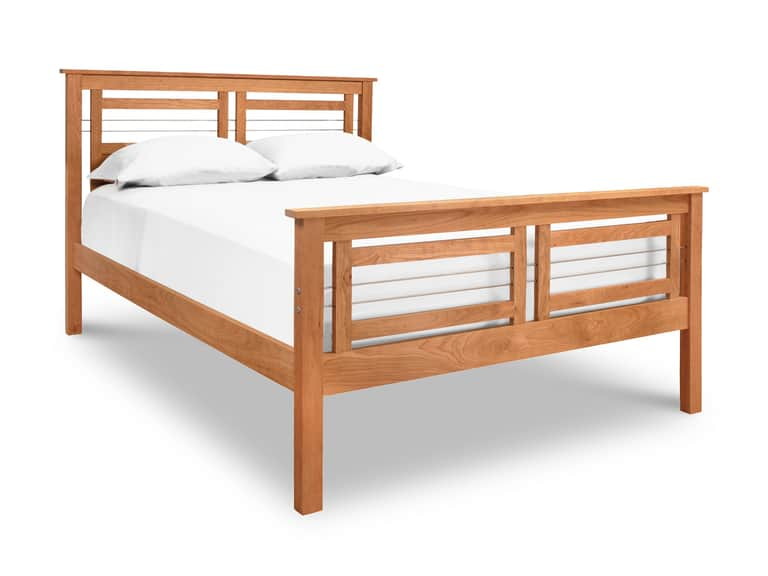
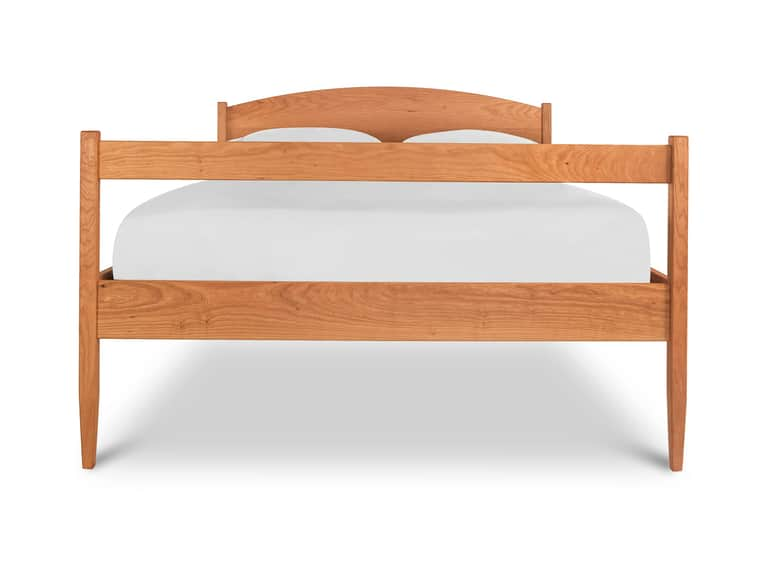
That is a useful perspective when looking at a frame from Vermont Furniture Designs. The Vermont Shaker Bed, for example, is described as a solid-hardwood platform bed with a curved headboard, tapered legs and a traditional blanket rail at the footboard. Those details offer a starting point, not a substitute for careful consideration. Whether you are shopping for your own home or evaluating furniture for a guest room, look beyond the name and the first impression. Examine what is specified, check what is not, and consider how the bed will work in everyday life.
What Shaker style means in a bedroom
Shaker-inspired design is generally associated with simplicity, usefulness and orderly form. In a bed, that can mean a frame without elaborate carving or decorative overlays, where the headboard, rails and legs provide the visual character. The aim is not to make a piece seem unfinished. It is to make each element earn its place.
That distinction matters because “Shaker-style” can describe a broad range of furniture. A label alone does not confirm a particular construction method, historical lineage or level of quality. Treat it as a design description and assess the actual frame in front of you. Look at the shape of the headboard, the way the rails meet the posts, the apparent balance of the legs and the overall coherence of the piece.
In the Vermont Shaker Bed’s description, the curved headboard and blanket rail add recognizable features to a minimalist outline. The curve can soften a room’s geometry without turning the bed into a highly decorative centerpiece. The blanket rail gives the footboard a practical, traditional detail. Together, these elements should feel intentional: integrated into the frame rather than added as visual afterthoughts.
Start with the wood—and the information provided
Material is one of the first things to verify. The Vermont Shaker Bed is described as made from solid hardwood. That is useful information, but hardwood is a broad category rather than a single species. If wood type matters to you, ask which species are used for the visible components and structural parts. Also ask whether all parts are solid wood or whether any components use engineered wood or other materials. Clear, specific answers make it easier to understand what you are considering.
If you can inspect a sample or finished frame, look for a consistent presentation across its surfaces. Grain naturally varies, so “consistent” does not mean every board should look identical. Instead, consider whether the finish appears even, whether transitions between components look deliberate and whether exposed edges feel smoothly finished. Check corners and the undersides of rails when accessible; these less prominent areas can help reveal how thoroughly a piece has been completed.
Do not treat color uniformity as a test of quality on its own. Natural wood can show differences in tone and grain. Ask what finish is used, how it should be maintained and whether normal variation is expected. Those questions are especially helpful if you are coordinating the bed with existing furniture, since online color descriptions and screen images may not capture the full appearance of a finished piece.
Joinery: the quiet work behind a sturdy frame
A bed needs to withstand repeated use, movement and the ordinary changes that come with a home. Joinery—the way its structural parts connect—is therefore central to craftsmanship. The Vermont Shaker Bed is described as emphasizing durable joinery, but a general description cannot tell you the exact joint types or every detail of assembly. Ask what connections are used where the side rails meet the headboard and footboard, how the center support is constructed and whether the bed is designed to be disassembled and reassembled.
If you are viewing a completed frame, look for rails that sit squarely and connections that appear aligned. Gaps, uneven edges or hardware that seems poorly seated are reasons to pause and ask for clarification. A visual inspection cannot establish long-term performance, but it can help you identify questions worth raising before making a decision.
Find out how the frame is supported, too. The product information identifies this as a platform bed, which means the mattress rests on the bed’s supporting structure rather than requiring a box spring as described for this design. Ask about the platform or slat arrangement, the recommended mattress requirements and any stated weight or support guidance. Those practical details matter just as much as attractive joinery: the frame and mattress need to work together as a system.
Read the proportions from every angle
Proportion is where a Shaker-style bed can either settle naturally into a room or feel unexpectedly dominant. A low, simple frame may look light in a showroom, while the same piece can occupy a substantial amount of space in a smaller bedroom. Note the overall length and width, the height of the headboard and footboard, and the clearance beneath the frame. If measurements are not readily available, request them rather than estimating from a photograph.
The tapered legs on the Vermont Shaker Bed contribute to its refined outline. Consider how their angle and placement relate to the bed’s mass. Do they make the frame look visually grounded? Is there enough clearance for cleaning or storage needs? Does the footboard’s blanket rail fit the way you plan to use the room? These are not simply style questions. They affect how people move around the bed and how the bed interacts with rugs, bedside tables and other furniture.
Measure the room carefully, including doorways, staircases and tight turns along the route to the bedroom. A bed can fit its final location and still be difficult to bring inside. Marking the planned footprint on the floor with removable tape can help you see how much walking space will remain. Include bedside furniture and the space needed to open drawers or closet doors. In a guest room, leave enough room for visitors to move around without navigating a furniture obstacle course.
Notice the details that define the design
Minimalist furniture rewards a close look. On a Shaker-style frame, small choices carry much of the personality: the curve of a headboard, the line of a rail, the transition from a leg to a side, and the relationship between the footboard and the mattress. Ask whether the visible surfaces are finished on all sides, whether edges are eased or sharply defined and whether the design has any care requirements that affect placement or use.
The Vermont Shaker Bed combines a curved headboard with a traditional blanket rail. Think about both features in the context of your habits. A headboard’s shape can influence how pillows sit and how the bed reads against a wall. A rail at the foot can provide a distinctive finishing line, but it may also affect how the bed feels in a compact room or how blankets are arranged. The right answer depends on your space and preferences, not on a universal rule.
For a balanced assessment, separate decorative appeal from workmanship. A detail can be beautiful without telling you whether the frame is sturdy. Conversely, construction can be sound even if a style is not your taste. Look at the piece as both an object of design and a piece of daily-use furniture.
Check stability and the everyday experience
When an in-person inspection is possible, ask whether you may gently check the frame for movement. Do not put unusual force on a display model. Instead, follow the seller’s guidance and pay attention to whether the bed appears level and whether its components feel secure during ordinary use. Ask about assembly instructions, the tools required and whether periodic tightening or other maintenance is recommended.
A bed’s stability depends on more than its visible woodwork. Flooring, assembly, mattress size and support configuration all play a part. If the bed will sit on an uneven floor or on a rug, ask whether the feet can be adjusted or whether there are recommendations for achieving a level setup. If you expect to move homes, find out whether the frame can be taken apart and whether repeated assembly is addressed in its care guidance.
Noise is another sensible topic. A quiet-looking frame is not automatically a silent one. Ask how to assemble the bed correctly, whether the design has particular points where connections should be checked and what steps the manufacturer recommends if movement or sound develops. Specific, written guidance is more useful than relying on assumptions about solid wood or platform construction.
Finish, care and the realities of daily use
A finish should suit the way you live as well as the way you decorate. Ask whether the surface requires special cleaning products, whether spills should be wiped promptly and whether direct sunlight or nearby heat sources are a concern. Follow the care instructions supplied with the bed; do not assume that a familiar household cleaner is appropriate for every finish.
Consider the bedroom’s conditions, too. A New Hampshire home may experience seasonal changes in indoor temperature and humidity, but each home is different. Ask the maker or retailer for practical care recommendations rather than treating regional climate as a one-size-fits-all rule. Sensible maintenance begins with the specific materials and finish used on the actual frame.
How the Vermont Shaker Bed fits the conversation
The Vermont Shaker Bed is presented as a solid-hardwood platform bed handcrafted in Vermont, with a curved headboard, tapered legs and a traditional blanket rail. Its box-spring-free platform design and minimalist silhouette make it a relevant example when considering Shaker-inspired bed construction. Those stated features describe the product; they should not be mistaken for an independent inspection or a guarantee of performance in every household.
Before deciding whether it is right for you, confirm the dimensions, hardwood species, support details, finish and care instructions. Ask about assembly, delivery access, applicable warranty terms and what is included with the frame. If you are comparing it with another bed, use the same questions for both. That keeps the decision grounded in comparable facts rather than in a name, a photograph or a general impression of craftsmanship.
A practical checklist before you decide
A short set of focused questions can turn a furniture search into a more confident evaluation. Keep notes as you compare frames, especially if several designs share a similar restrained look.
- What wood species are used, and which components are solid hardwood?
- How are the side rails, headboard and footboard joined?
- What platform or slat support does the bed use, and what mattress guidance applies?
- What are the complete dimensions, including headboard height and under-bed clearance?
- What finish is applied, and what care instructions should be followed?
- Can the frame be disassembled for a move, and what assembly guidance is provided?
- What warranty, delivery and return terms apply to the specific order?
- Will the bed fit through the route to the room and leave comfortable space for daily movement?
The final test: does good design feel right at home?
A well-considered Shaker-style bed does not need to dominate a bedroom to give it structure. Its appeal often lies in the way a few thoughtful lines bring order to the space, while the frame remains practical enough for everyday use. The best evaluation looks past the word “craftsmanship” and asks what supports it: clear material information, carefully finished details, sound connections, sensible proportions and useful guidance for assembly and care.
For Vermont Furniture Designs, the Vermont Shaker Bed’s described hardwood construction and purposeful details make it a natural frame to assess through that lens. Take time to verify the specifics, measure the room and consider how the bed will serve the people who use it. When construction, comfort requirements and proportions all make sense together, understated design can prove to be more than a passing style—it can become a steady, welcoming part of the room.
The most reliable choice is not necessarily the most ornate or the one with the boldest claims. It is the one whose construction you understand, whose dimensions suit your space and whose everyday details match your needs. In a Shaker-inspired design, that careful attention is exactly where the character lives.